
Lesson 1
Read structure before naming a pattern
Describe trend, range and transition using the swings visible at the time.
Study time: about 8m
Lesson
Start with a plain description of the chart. Are completed swings making higher highs and higher lows, lower highs and lower lows, or overlapping around the same area? That gives you a working description of trend or range on the timeframe you selected.
A swing is only confirmed according to a rule. For replay, you might require a high to have two completed bars on either side with lower highs. That means you cannot use it before those later bars exist. Your rule can differ, but it must be stated and used consistently.
One break does not automatically establish a new trend. It can mark a transition, an unusually wide bar or a failed break. Describe the evidence and the unresolved part separately. A short-term down move can also sit inside a longer-term uptrend; specifying the timeframe prevents an apparent contradiction.
Worked example
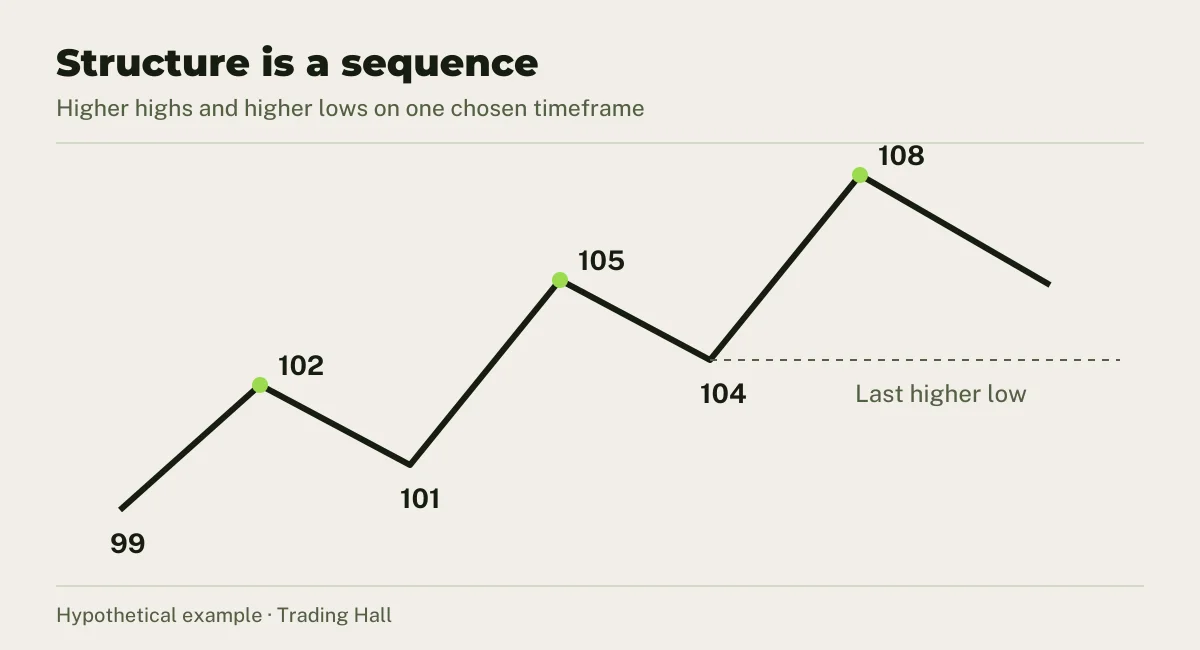
A hypothetical sequence has confirmed highs at 102, 105 and 108, and intervening lows at 99, 101 and 104. That is rising structure. A subsequent move below 104 challenges the most recent higher low. It does not by itself prove that every timeframe has become bearish.
Try it in replay
On a hidden-future replay chart, mark three confirmed highs and lows using one rule. Write a one-sentence description and identify the swing whose loss would change it.
Check your reasoning
Your marks must use only bars available at that moment. “Rising five-minute structure, with 104 as the last confirmed higher low” is testable. “It looks bullish” is too vague.